
by Doug Drynan, Vice President of Carrizo Plain Conservancy
All photos by Doug Drynan
I recently took a leisurely drive along the east side of the Carrizo Plain National Monument (Monument) to check on the progression of the spring bloom and see if perhaps I had already missed the bulk of it. Spoiler alert: I didn’t – but was glad I went when I did.
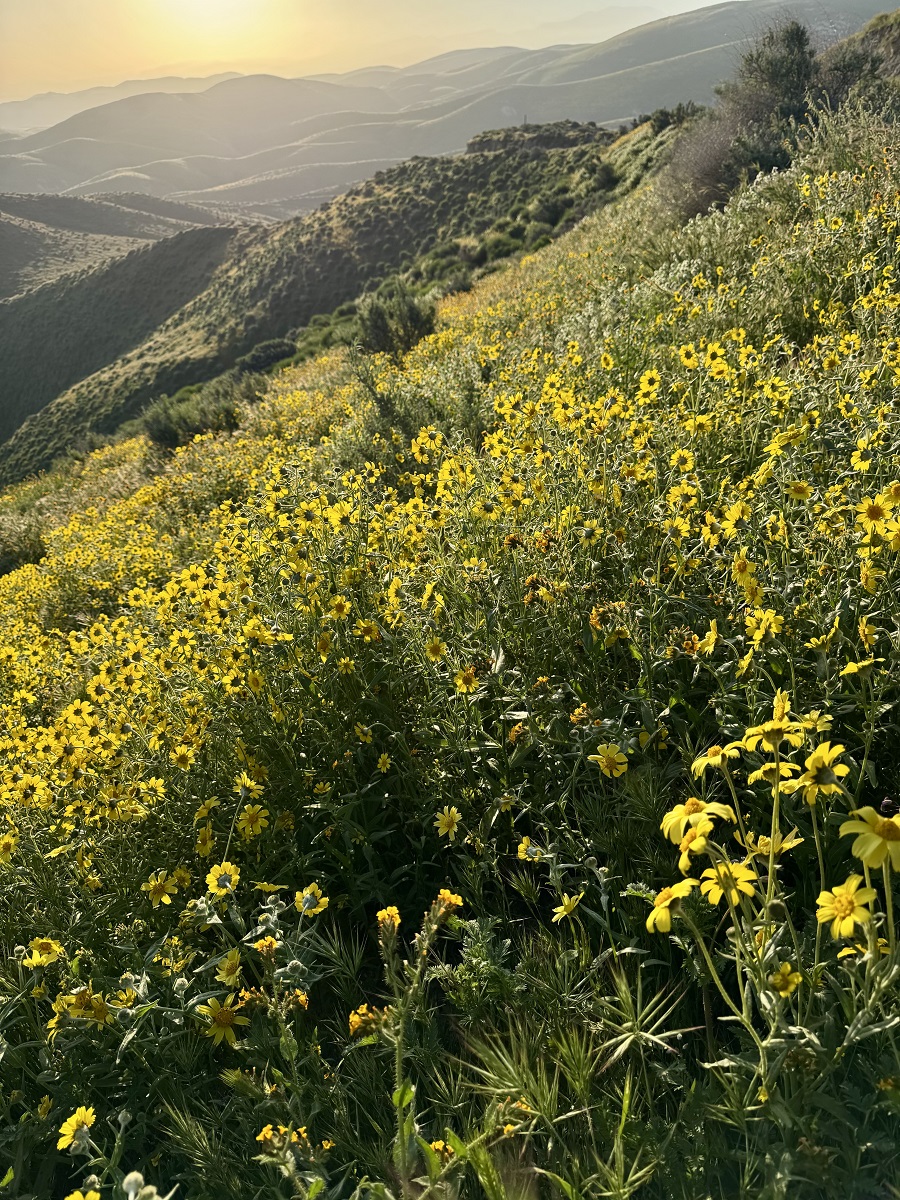
I entered the Monument from the far south end, taking Elkhorn Grade Road where it branches off State Route 166 just Southwest of Maricopa. I got an early start in the morning (I was already in the San Joaquin Valley for work), so I could enjoy the early morning light as I made my way up the pass. I enjoyed mass blooms of hillside daisy (Monolopia sp.) as the sun hit the wrinkled hillsides of the Temblors.
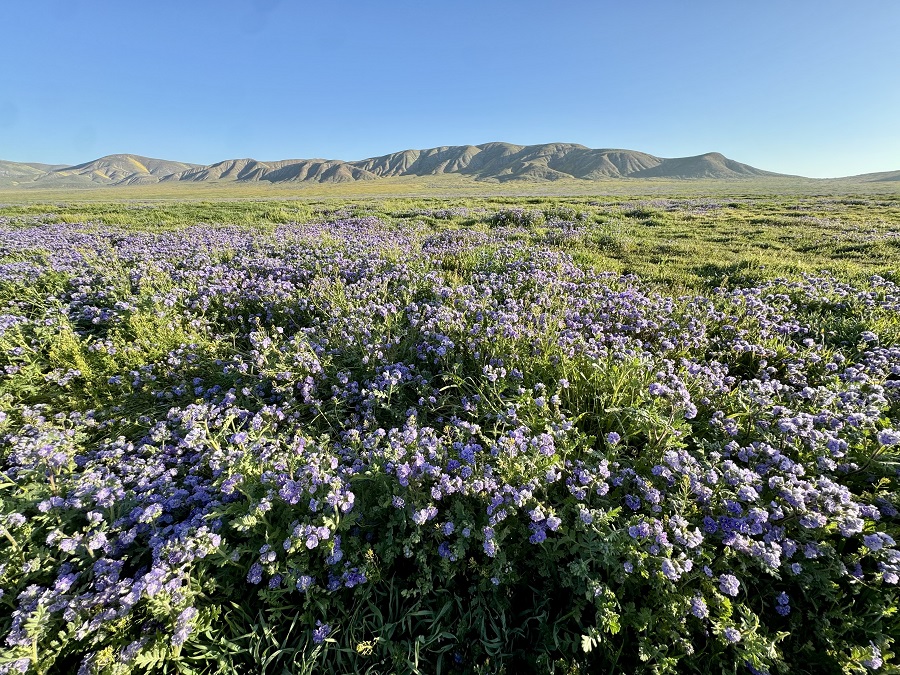
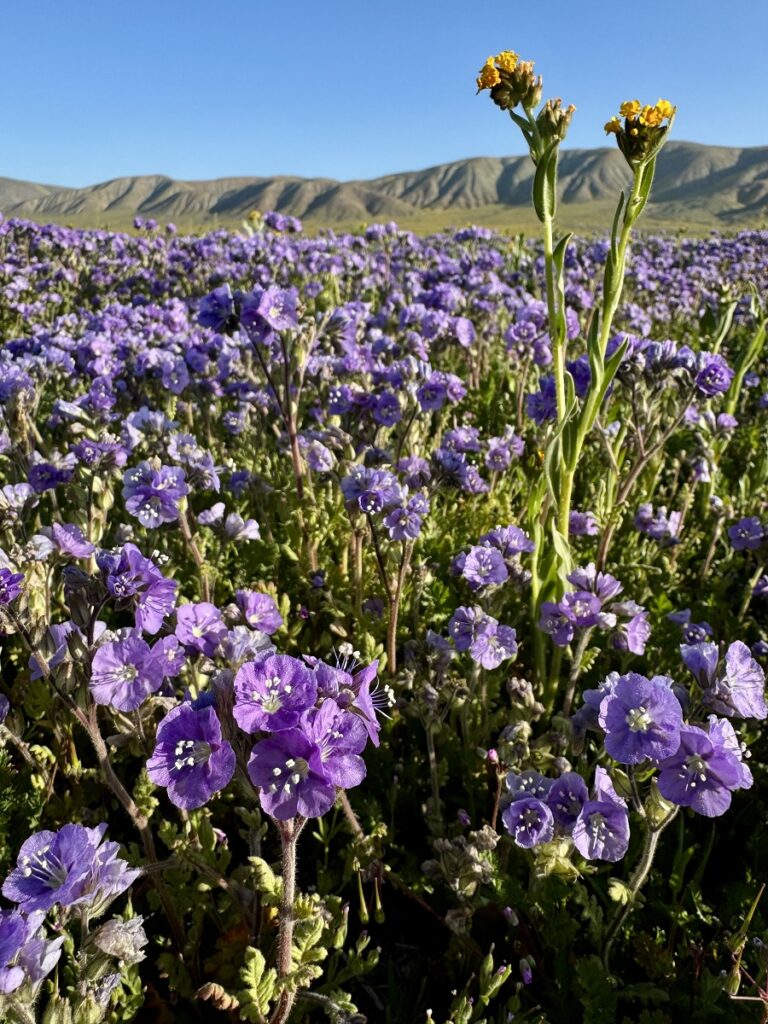
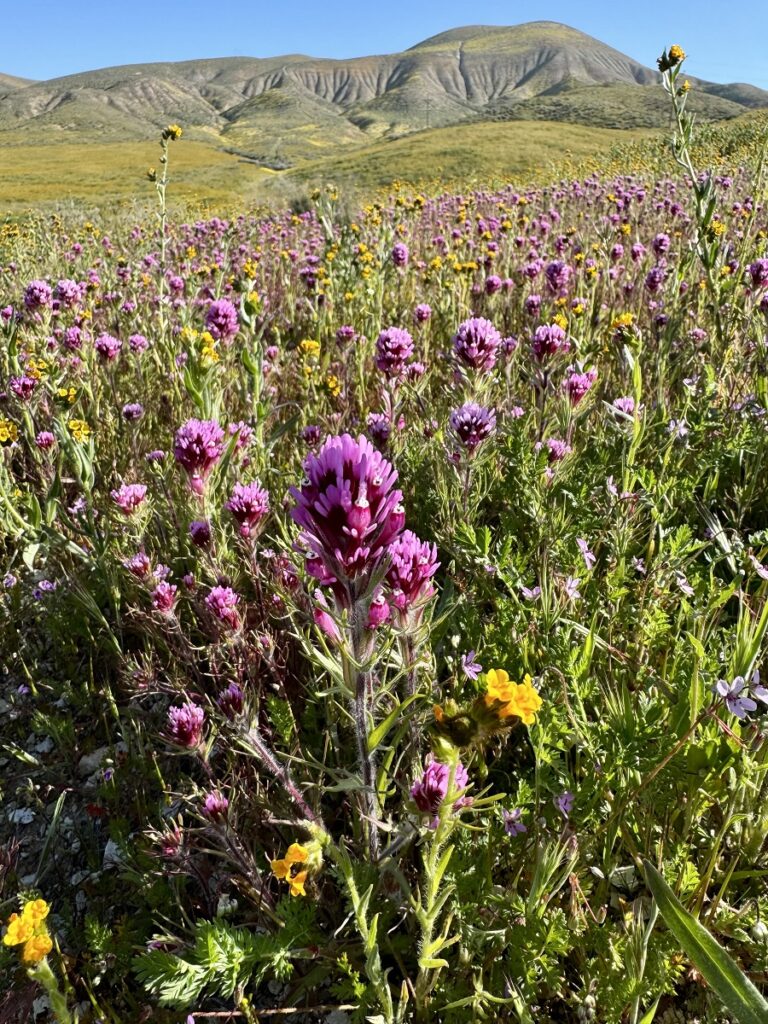
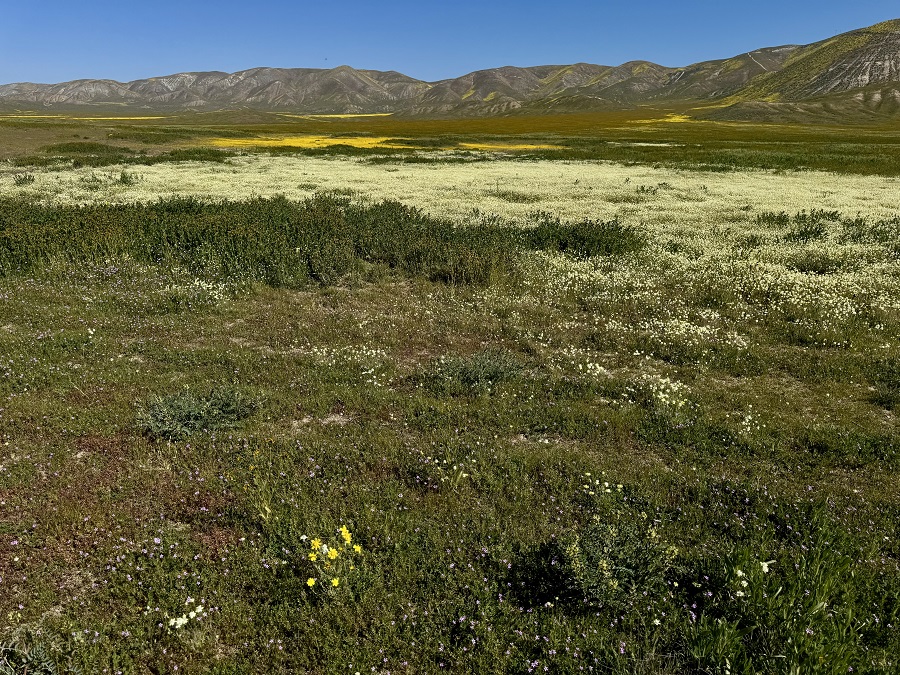
By 0800, I was entering the far south end of the Elkhorn Plain. One of my favorite spots in the Monument. There was an ocean of green, yellow, and purple, with dense fields of fiddleneck (Amsinkia sp.) and phacelia (Phacelia sp.) mixed in with patches of purple owl’s clover (Castilleja sp.).
It appeared to me that the fiddleneck blooms were approaching the ends of their “fiddle necks” and would soon enter the seed development stage. (Field biologists conducting surveys in such post-bloom fiddleneck fields would soon be cursing this plant as they stopped to pick out stabbing seed heads that somehow made their way past snake chap and pant leg to embed between sock and skin).
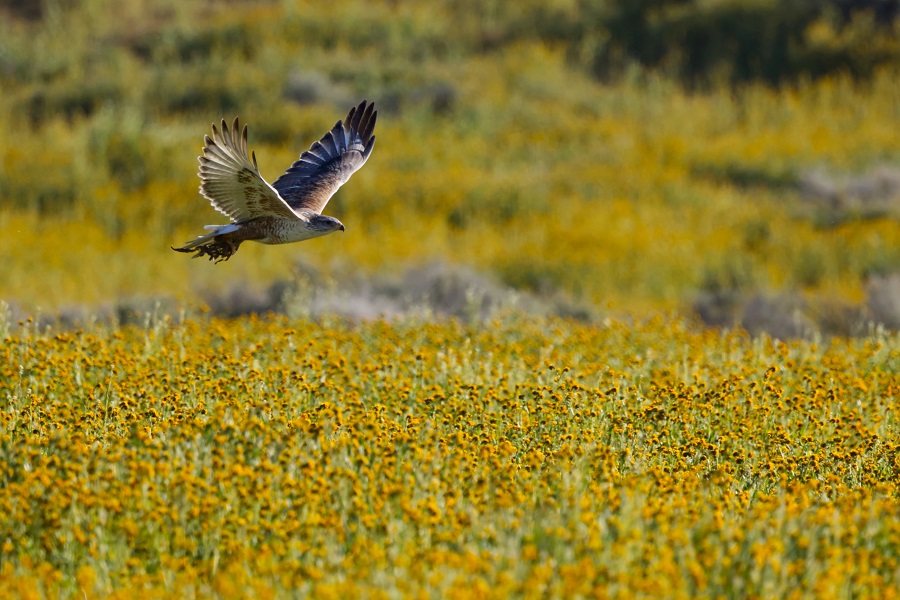
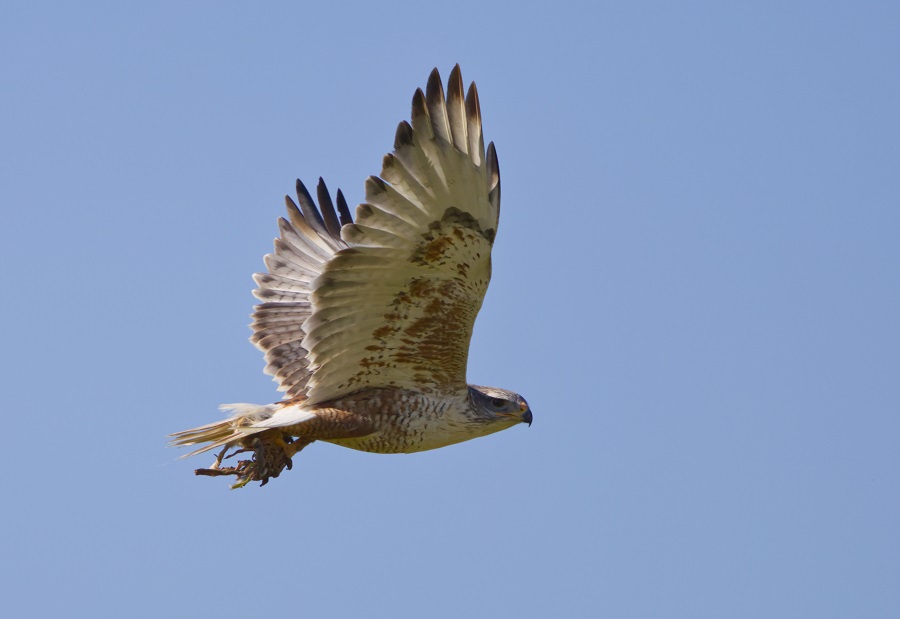
I stopped for a brief interlude to watch a ferruginous hawk (Buteo regalis) hunting from atop an electrical pole. The bird was intently watching something in a sea of fiddleneck, and then it suddenly dove down to the ground and disappeared in the blooms. I waited in anticipation with my camera, and the bird soon launched upward and was carrying what looked like a talon-full of herbaceous vegetation – and I assumed it had missed its target.
It was only later, while I reviewed my photographs and was able to zoom in, that I saw the telltale tail of a kangaroo rat (Dipodomys sp.) trailing out of the clump in its talons. I was surprised that the mighty ferruginous hawk would go after such meager prey, but I guess an opportunistic snack is always welcome!
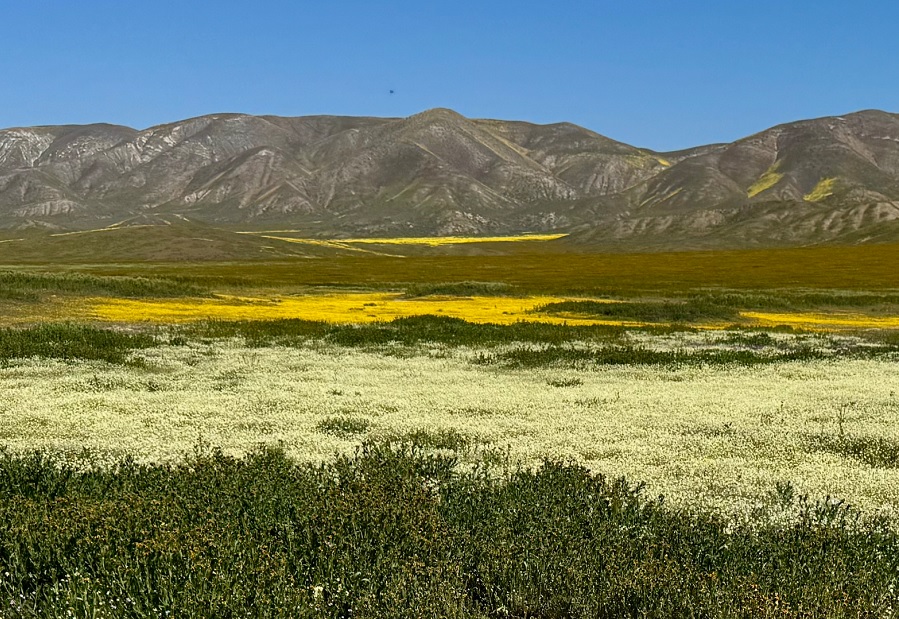
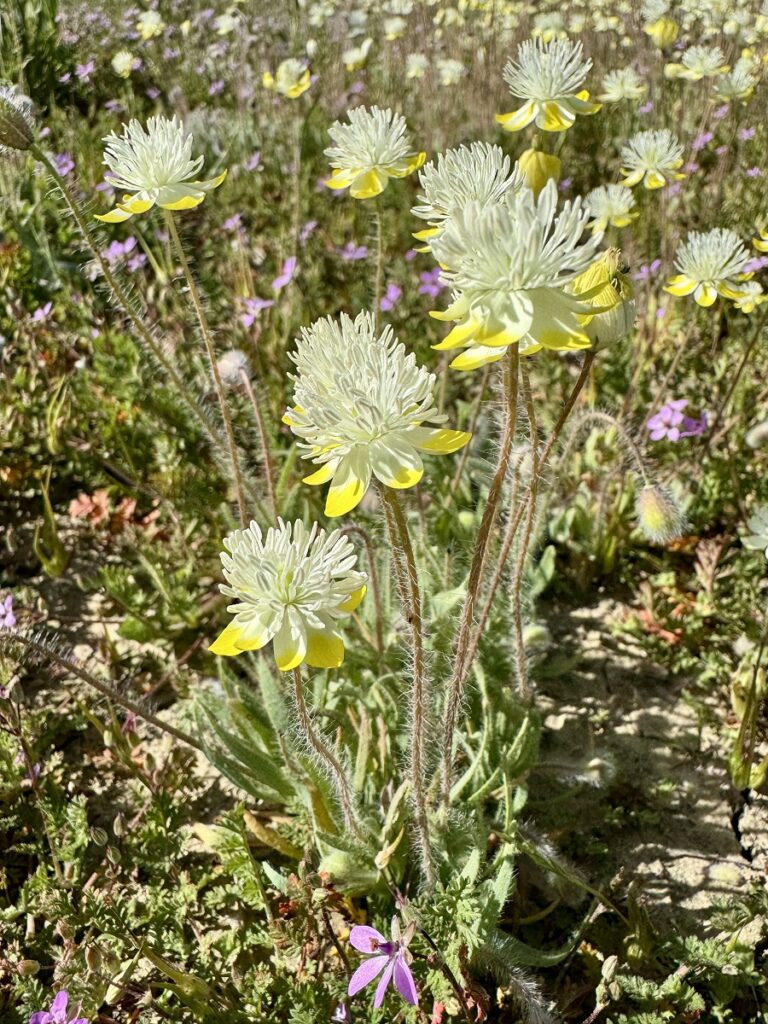
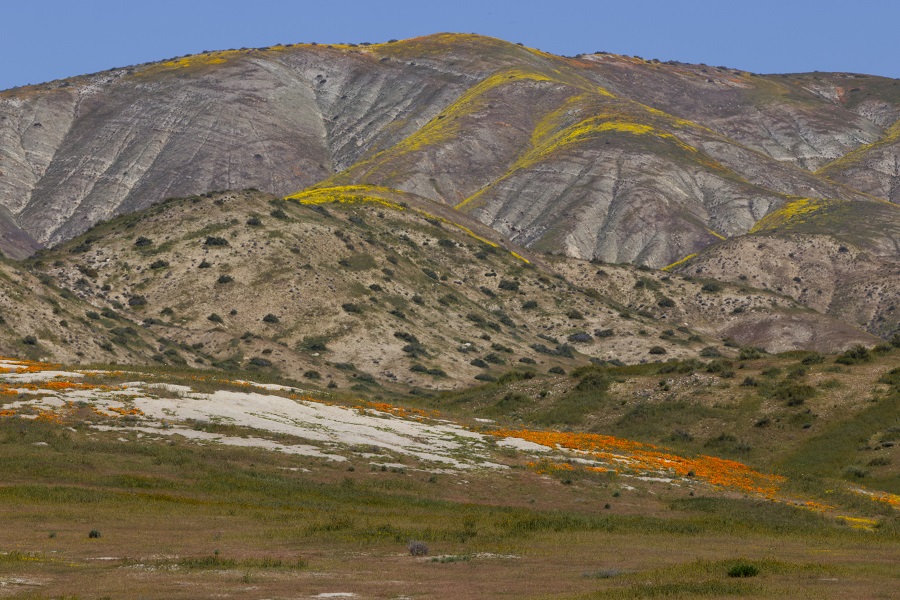
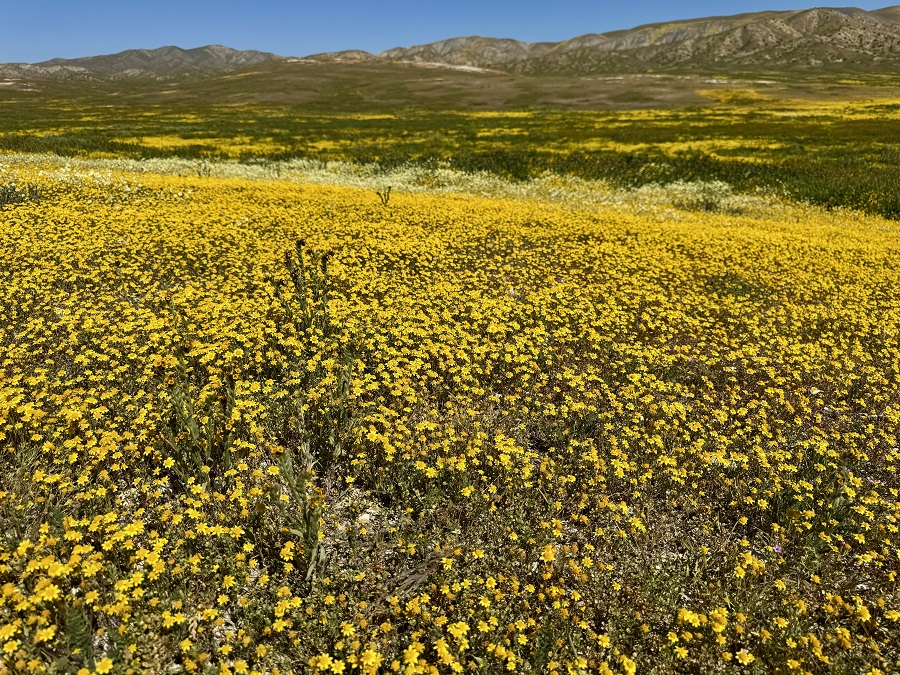
Continuing north I soon came to some more significant patches of color, with the cream white of cream cups (Platystemon sp.) being one of my favorite flowers for the day. I also started to see small patches of bright orange on the distant hillsides, indicating patches of California poppy (Eschscholzia sp.). California goldfields (Lasthenia sp.) were bursting with yellow all around.
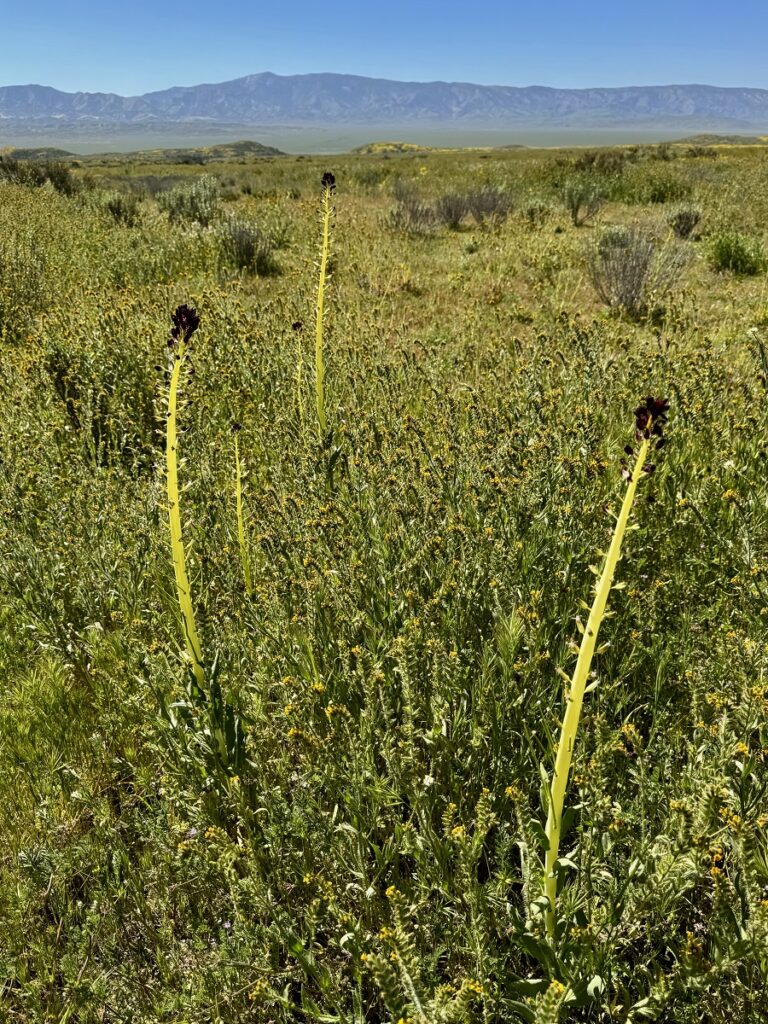
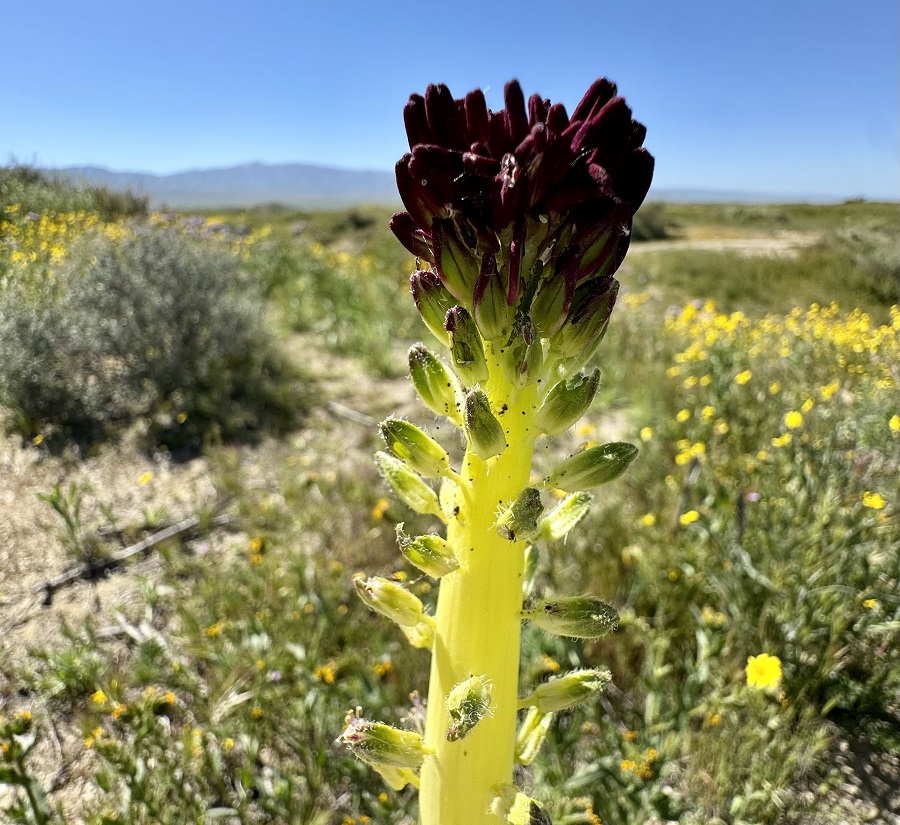
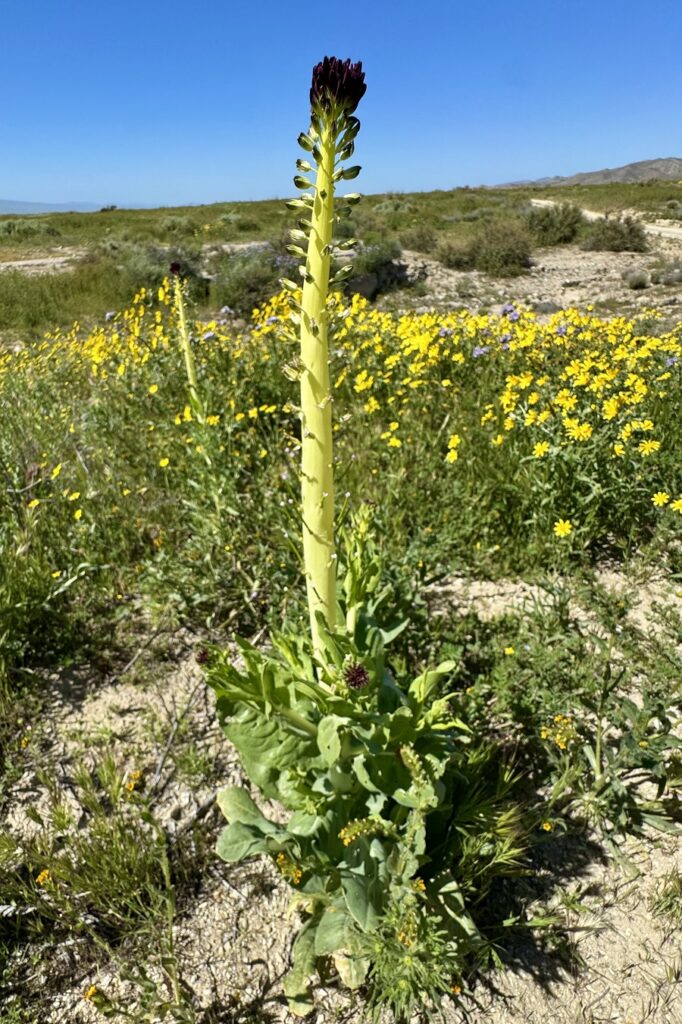
One of the most impressive plants that I saw during my journey was desert candle (Caulanthus inflatus). There was a small group of about 12 individuals that were clustered near a dry streambed that crossed Elkhorn Road. The pale yellow-green stalks really popped out visually as I was driving by. My photographs do not do this plant justice, and I recommend getting out there and seeing one in person.
General impressions after my trip: I didn’t miss the bloom, but I felt like I was there in the nick of time to see larger displays of mass color, and most of those that I observed seemed to be concentrated in the far south end of the Elkhorn Plain.
It seemed to me (as a non-botanist) that the north had already passed the “mass bloom” period (at least for fiddleneck), but I was still seeing plenty of splashes of color, from flowers such as purple owls clover and goldfields. So don’t delay if you want to catch spring out in the Carrizo!