by Doug Drynan, Vice President of Carrizo Plain Conservancy
*Note: Article originally appeared in Carrizo Plain Conservancy’s Dec 2022 newsletter
All photos by Doug Drynan
It’s that time of year when the Carrizo Plain gets crowded. But not because of the wildflower spectacle and hordes of tourists chasing blooms, but by northern raptors looking for a milder climate to wait out the harsh winter. The plain is the perfect place for these visitors, with its wide-open desert grasslands, shrub lands, and alkali flats where abundant rodent populations thrive to support these birds over the next few months. The rodents may not be so thrilled to host these visitors, but for nature and bird watchers it is a spectacle not to be missed.
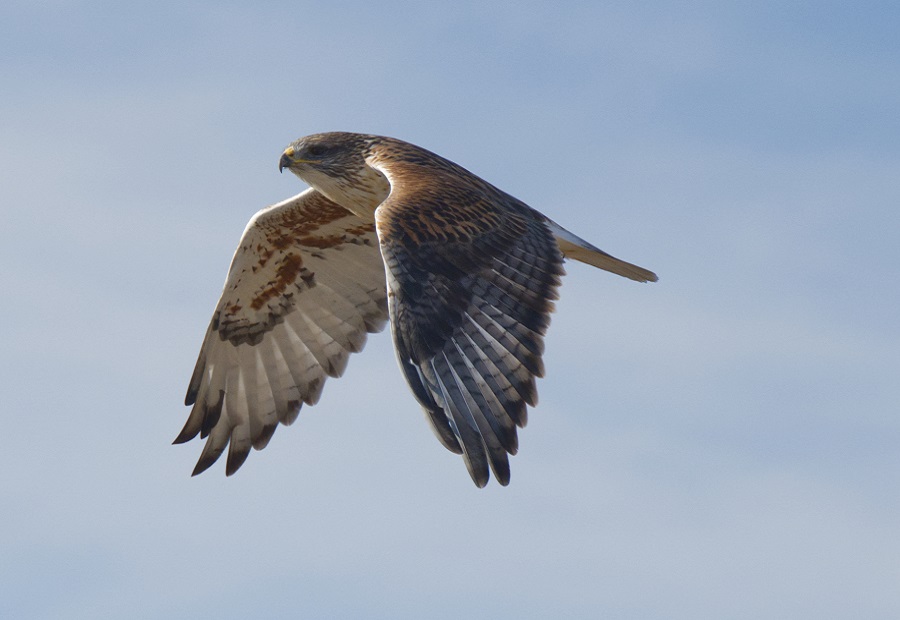
I was out there in mid-November and saw my first ferruginous hawk (Buteo regalis) of the season. I observed the bird right off State Route 58 very close to some Carrizo Plain Conservancy properties near the California Valley Solar Ranch project. According to the Cornell Lab of Ornithology eBird platform, ferruginous hawks can start showing up on the Carrizo in September and by the end of March the following year most have started making their way north and east again. This hawk is the largest Buteo species in North America, and many people mistake it for an eagle, and justifiably so since it is closely related to the golden eagle (Aquila chrysaetos) (Ng et al, 2020). It is a majestic bird, that like most raptors has many plumage variations (morphs) and can be almost completely dark to a striking white and rufous. The bird I saw was a stunning light morph that decided to fly toward me almost at eye level near the spot where I was parked, giving me the best up-close views I have ever had of this species.
The other northern visitor is much less common to see, and I had no luck seeing one on my recent visit, but the rough-legged hawk (Buteo lagopus) is a species that can turn up on the plain starting in November and remain through about March. It is an artic breeder and has a panboreal breeding range (Bechard et al, 2020), meaning that it can occur throughout the entire artic region north of Canada, Europe, Russia, and China. Like most raptors it can have a dizzying range of color morphs, so it’s always good to do some homework before your visit and review key characteristics to watch for when in the field. I checked eBird accounts before I headed out, and none had been seen on the plain yet this fall, but I was hopeful that one may be there early. I had no such luck but saw some great resident species that always make a trip to the Carrizo worthwhile.
The many year-round resident raptor species are always exciting to see, and never disappoint with some spectacular viewing opportunities. I had brief looks at a prairie falcon (Falco mexicanus) as it hunted along Soda Lake Road, flying from post to post looking to startle up a meal. They blend in seamlessly with the golden brown of the dried grasslands at this time of year.
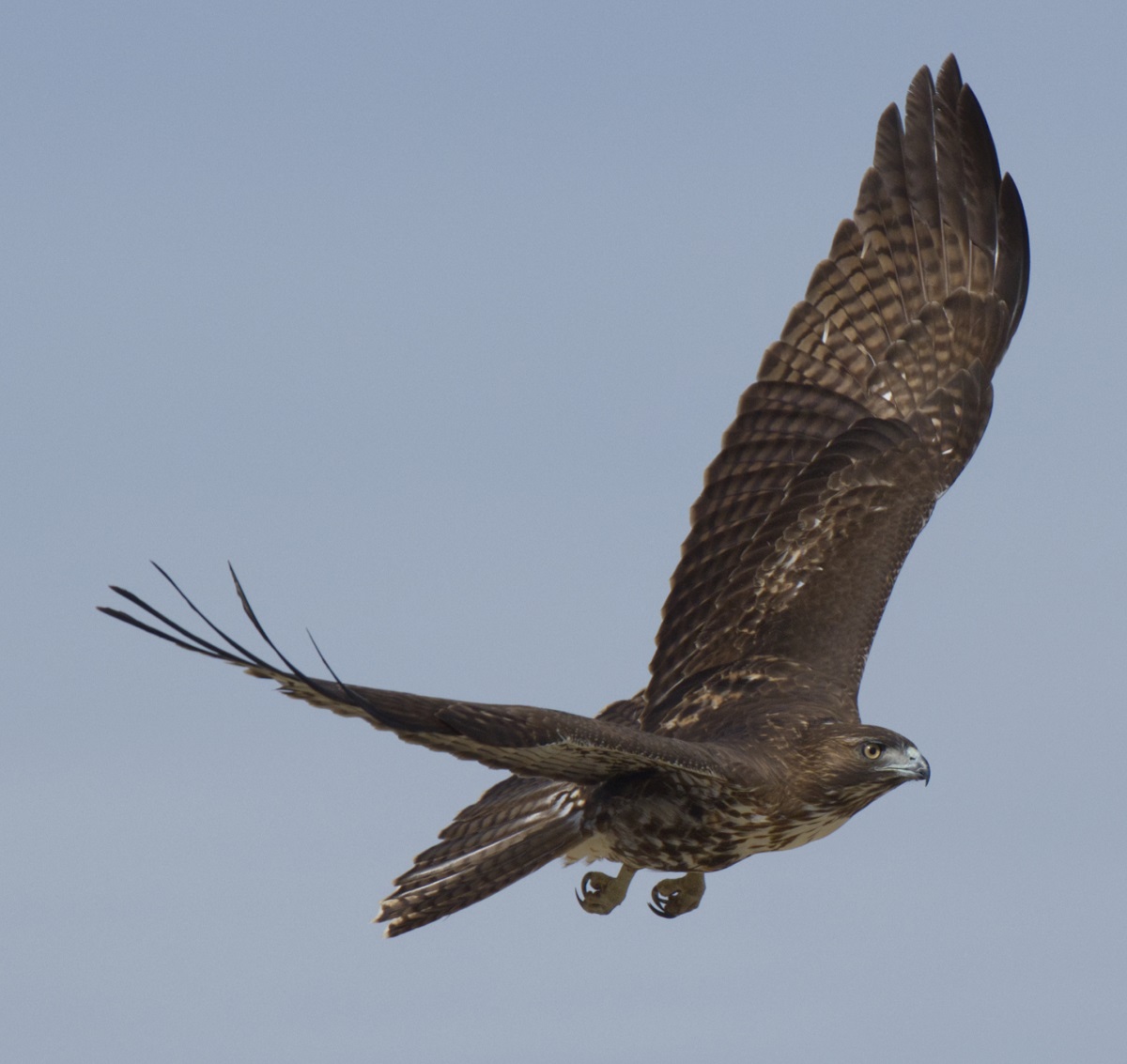
A juvenile red-tailed hawk (Buteo jamaicensis) presented me with some striking views up close. It was not disturbed by the presence of my truck on the road, as is often the case with raptors and other birds who may tolerate vehicles on roads at closer distances than a person out on foot.
A good strategy for catching a glimpse of raptors is to drive slowly down a main route such as Soda Lake Road or Elkhorn Road, stopping periodically to scan the horizon and sky for soaring birds. Don’t forget to look down at the many fence posts and water tanks that raptors love to perch on for elevated views of their hunting grounds. I almost always see a prairie falcon perched on wood posts down in the Carrizo Plains National Monument (before the KCL Campground turnoff).
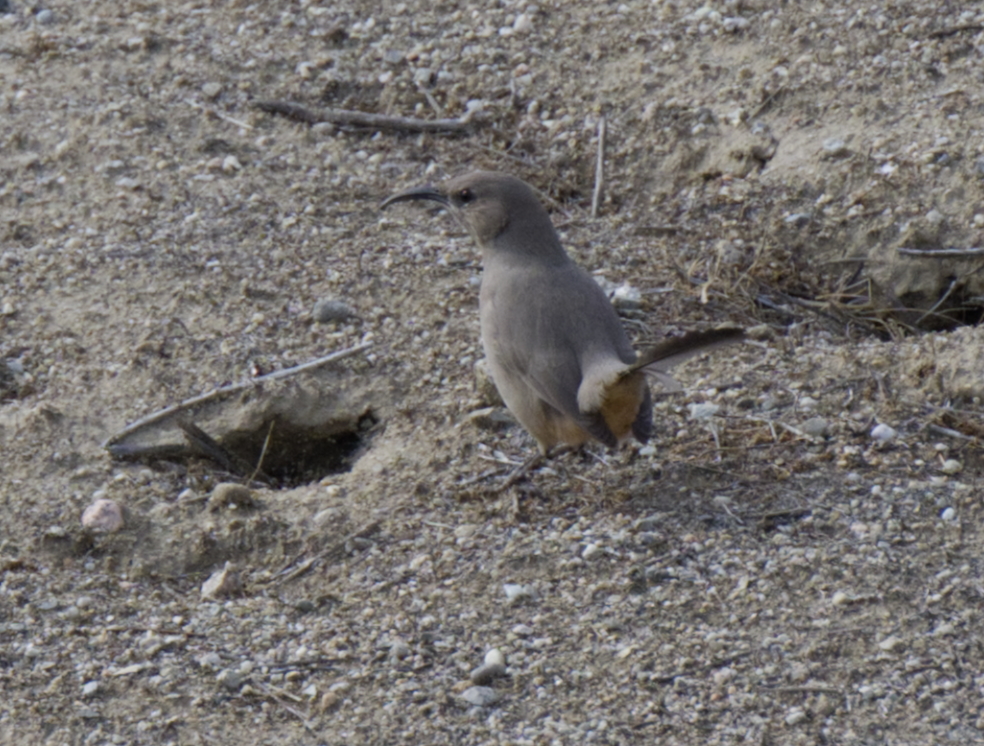
LeConte’s thrasher (Toxostoma lecontei) in the Carrizo Plain
There are many other birds that are also fun to see on the Carrizo and are species that you don’t often see in other places in San Luis Obispo County. Species such as LeConte’s thrasher (Toxostoma lecontei), Bell’s sparrow (Artemisiospiza belli), and mountain plover (Charadrius montanus) to name a few. Birds, both migratory and resident, are a key part of the Carrizo Plain ecosystem that is important habitat for many species; one of the reasons it is considered an Important Bird Area in California (Cooper, 2004).
The Carrizo Plain Conservancy is a critical part of the overall conservation strategy for the plain and has been working tirelessly to acquire more pieces of the conservation lands puzzle and fill in gaps between existing conserved areas. Our vision statement includes the word “connectivity”, and the Carrizo Plain is an important region for so many species of birds, particularly for those long distance migrant species that are facing increasing threats throughout their range.
So what are you waiting for? Get out there and don’t forget your binoculars, you won’t be disappointed!
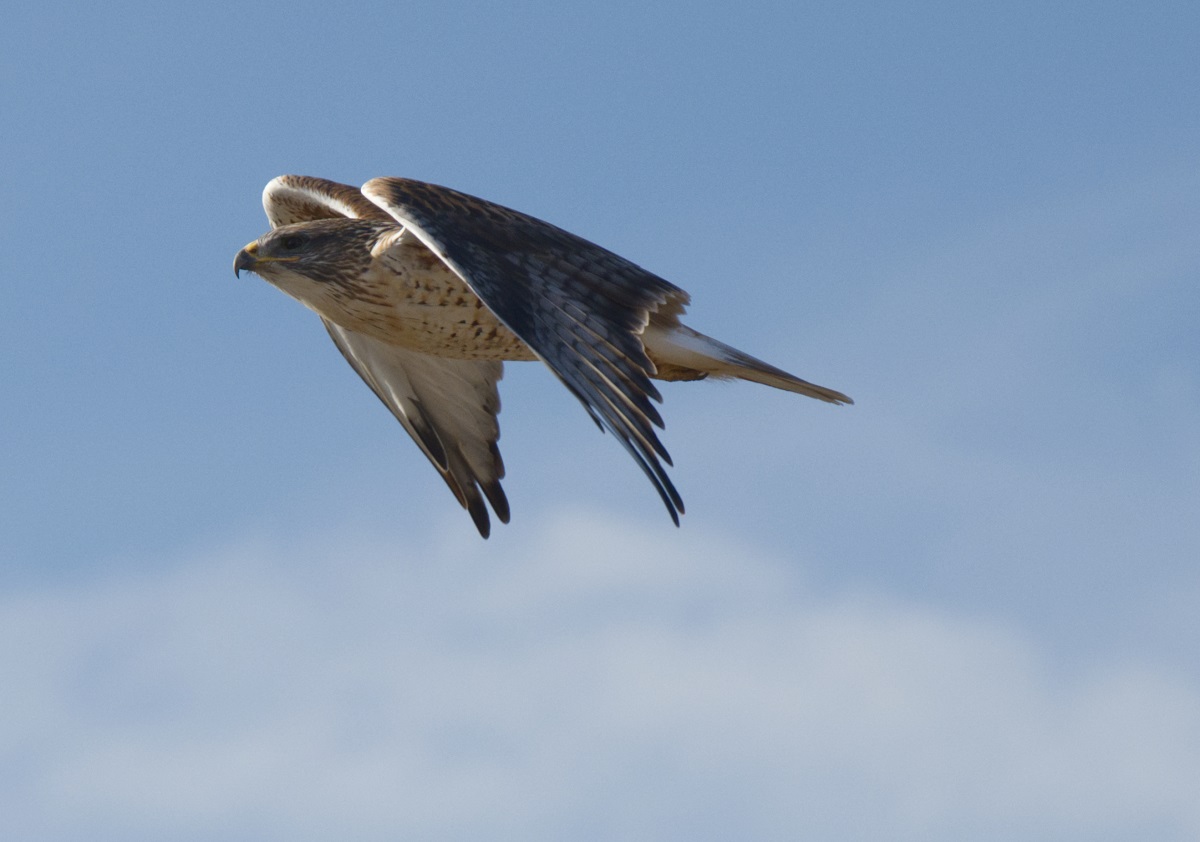
The ferruginous hawk (Buteo regalis) in Carrizo Plain National Monument.
—
References and links:
A great source for general bird information is the Cornell Lab of Ornithology. Their eBird platform (https://ebird.org/home) is an outstanding citizen science tool that contains a huge number of bird sightings and is growing every day. It’s easy and free to set up an account and then you have access to their enormous database of bird sightings. Their bar chart feature is a great way to see which species have potential to occur in your target area at the time of your visit. You choose the region and subregion (for the Carrizo Plain you would select the subregion “Important Bird Areas of California”, and then select Carrizo Plain). You will then get a list of the species of birds with potential to occur, with a bar chart showing when that species has the highest likelihood of occurring, by month.
For information on Ferruginous hawks and rough-legged hawks, Cornell Lab Birds of the World: https://birdsoftheworld.org/bow/home
Bechard, M. J., T. R. Swem, J. Orta, P. F. D. Boesman, E. F. J. Garcia, and J. S. Marks (2020). Rough-legged Hawk (Buteo lagopus), version 1.0. In Birds of the World (S. M. Billerman, Editor). Cornell Lab of Ornithology, Ithaca, NY, USA. https://doi.org/10.2173/bow.rolhaw.01
Ng, J., M. D. Giovanni, M. J. Bechard, J. K. Schmutz, and P. Pyle (2020). Ferruginous Hawk (Buteo regalis), version 1.0. In Birds of the World (P. G. Rodewald, Editor). Cornell Lab of Ornithology, Ithaca, NY, USA. https://doi.org/10.2173/bow.ferhaw.01
Important Bird Areas:
Cooper, D.S. 2004. Important Bird Areas of California. Audubon California. 286 pp. Available (online) at: http://iba.audubon.org/iba/stateIndex.do?state=US-CA